Monday, 1 February 2010

Photo Ethics

Manipulation has always been a key aspect to photography. Using photos to communicate has become increasinly popular since the first photograph was taken in 1826. Whether its cutting key elements out of a picture to make it mean something else or cropping the piture to make the viewer have a different outlook, every picture tells some kind of story.


In this picture Stalin had his commissar removed from the photo when he fell from power because he was considered an enemy, so through history when people viewed this picture no-one would have known that there was even another man there.

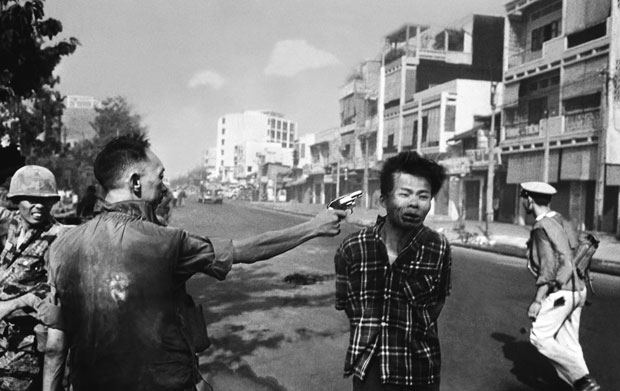
This picture was taken from the Veitnam war.

Monday, 18 January 2010

Semiotics & Representation

Semiotics is the study of signs/images
Representation is how people and places are viewed through images.

Semiotics is the study of sign systems. Any word that ends in "ics" is the study of something. Semiotics is when media texts are taken apart to show meanings. It also shows important aspects of the text such as trust are created. Semiotics show that meanings can be developed at the simplist of levels.

Denotation is the single basic or literal meaning
Connotation when semotics are used to explore the secondary or associated meanings of signs and codes that become interesting.

Monday, 4 January 2010

Photo Journalism


Photo Journalism is showing reality through pictures. The key is to getting the moment right, "the decisive moment" is pressing the shutter at the most optimum moment.

Some of the most influential photographers were Robert Cappa, Man Ray, Paul Strand and Henri Cartier-Bresson. Robert Cappa was born on October 22nd 1913 and he died May 25th 1954. He became one of the most famous war photographers to date. One of the pictures he captured was a man being killed by a bullet.

Another influential photographer was Henri Cartier-Bresson. He was born August 22, 1908 and died August 3, 2004. He helped to develop "street photography" which has shaped the way journalism has developed over the years. His most famous piece was `Behind the Gare St. Lazare Paris. The way he took the picture showed how Europe was taking a step into the unknown just as the man was doing in the picture.